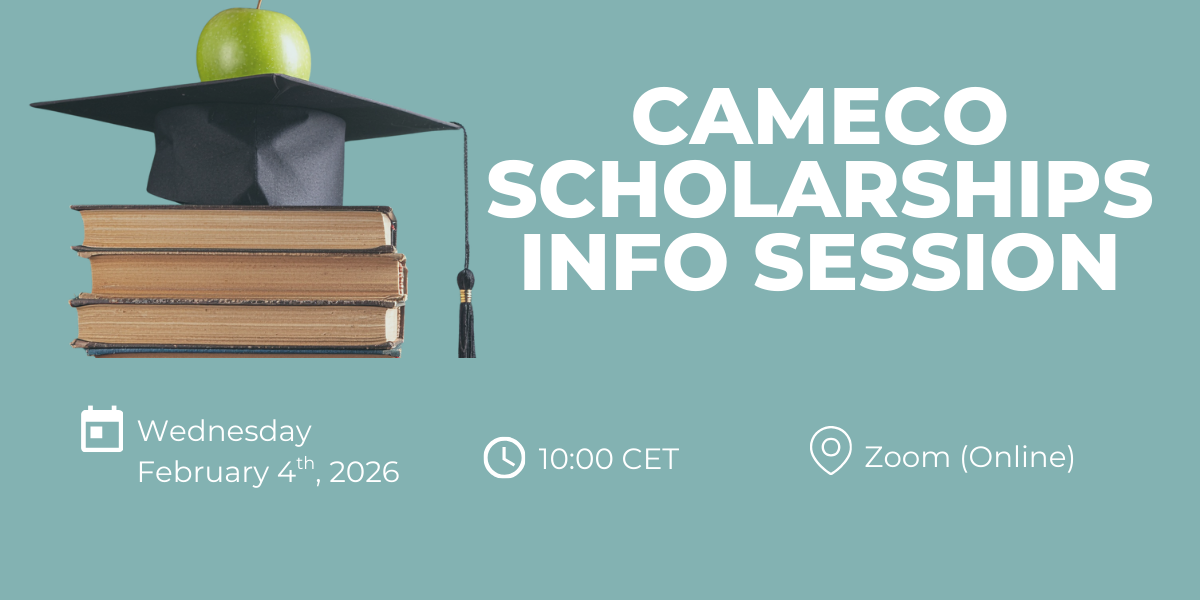
CAMECO is currently administering two different scholarship calls under the Cardinal Foley framework.
While both support communication and media formation within the Church, they differ in purpose, target groups, and, at times, regional scope.
To help clarify these distinctions, we have compiled the most frequently asked questions in this article to address any doubts or confusion applicants may have.
No.
CAMECO manages two distinct scholarship initiatives:
They have different objectives, target groups, and funding priorities.
Applications are assessed according to the specific criteria for each call.
The Cardinal Foley Scholarship Fund focuses on qualifying future leaders in Church communication.
It supports candidates who have the capacity to:
Applicants from the following regions are eligible:
Important clarification: Latin America is no longer funded under the Cardinal Foley Scholarship Fund.
The scholarship is intended for candidates working within Church structures (including ordained ministers, religious, and lay professionals) who are nominated by their diocese or institution.
Direct individual applications are not accepted.
The fund supports graduate and postgraduate programmes in (pastoral) communications, whether in the applicant’s home region or in Europe/North America.
Applicants are encouraged to choose relevant study opportunities close to home, and approximately half of the scholarships are reserved for postgraduate courses in Africa, Asia, or Oceania.
Important: Undergraduate studies and professional courses in communications and related areas may also be supported in select cases. Applicants must complete such training in their region of origin before submitting an application.
This programme is open exclusively to female religious, including members of congregations, secular institutes, or societies of apostolic life.
Its focus is on talented creatives, communicators, managers, and influencers who are expected to take up key roles in the media and communication ministries of their congregations or institutes.
The programme supports candidates from:
The Sisters’ Programme supports a range of learning opportunities, including:
All studies must have a clear link to the applicant’s future responsibilities, such as managing social media, running radio or TV programs, publishing, teaching communication, or promoting media literacy.
Applicants are encouraged to select programs appropriate for their context and accessible within their region.
No. Applicants are only eligible for the programme that matches their background, region, and planned future role. Applying to the wrong programme may result in exclusion.
No. All application forms must be completed digitally, saved, and submitted via email to the address indicated on the form. Printing, handwriting, and scanning are not required.
Applicants must attach all mandatory supporting documents, as listed on page six of the application form.
Applications written wholly or partially with AI tools (such as ChatGPT or Gemini) will not be accepted.
AI may only be used for grammar correction, and any such use must be clearly disclosed, as applications are reviewed using AI-detection tools. Drafting content with AI may generate responses that are similar, limiting the selection committee’s ability to assess each applicant’s unique perspective and potentially affecting selection decisions.
Applicants and institutions may contact scholarship@cameco.org for clarification or attend the information webinar on Wednesday, 4 February, at 10:00 CET. Registration is available here.
You can also read more about each scholarship by clicking the links below: