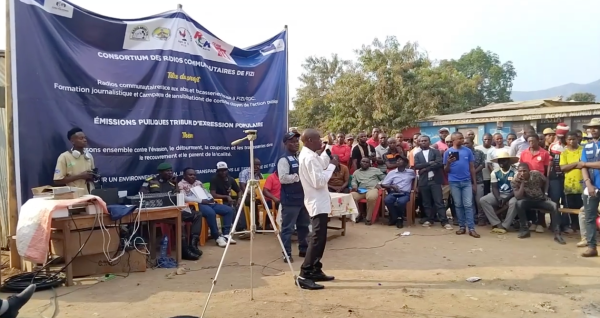
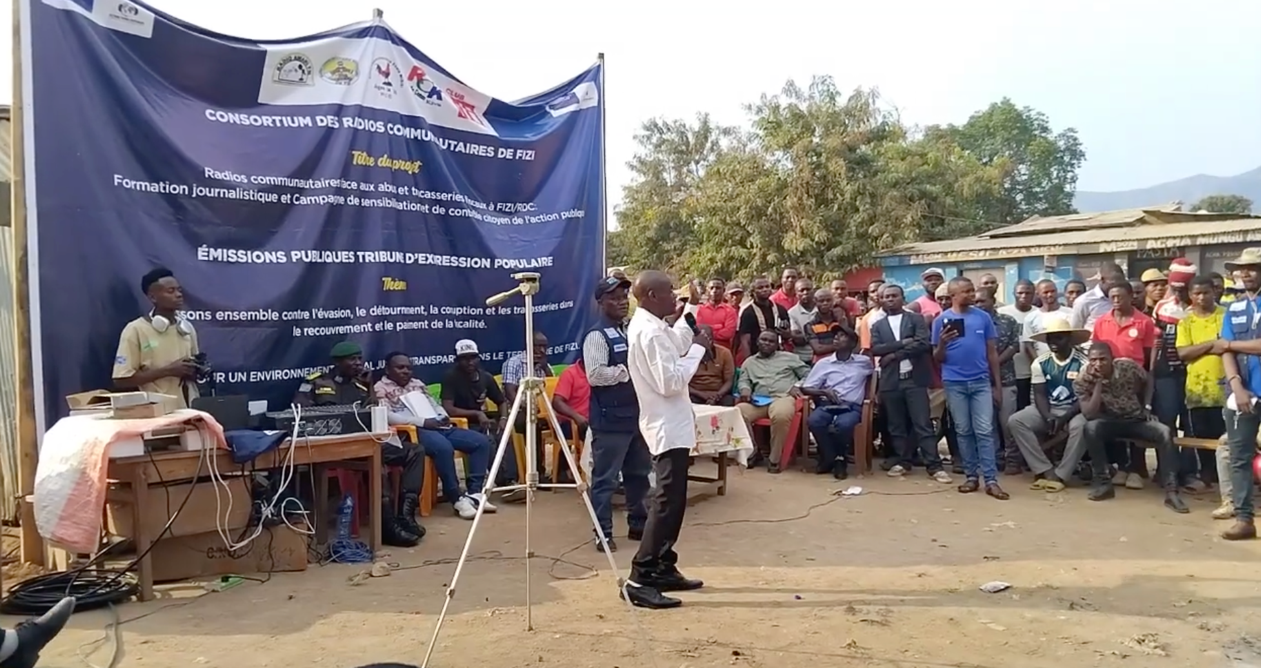
The community radios Amani FM-Malinde, Ebala of Misisi, Kivu, and Muungano brought together eight Radio Clubs known as “Citizens’ Public Action Monitoring Committees” (comités locaux du contrôle citoyen de l’action publique) and fostered compliance with anti-fiscal harassment.
This one-year project, funded by Stem van Afrika (SvA), aimed to strengthen the capacities of media actors and local communities in Fizi, South Kivu, in the Democratic Republic of Congo (DRC), to promote transparency and accountability in public fiscal management.
“Ignorance of tax collection procedures by tax officials and taxpayers contributes to the persistence of harassment and abuse of power and taxpayers’ rights”, recalled Stanislas Woanga Kamengele, director of Radio Amani.
Involving communities
The radio campaigns, roundtable programmes, and citizen oversight of public action through the radio clubs raised awareness to combat fraud, corruption, embezzlement, abuse, and tax harassment, and promoted strong community mobilisation and involvement.
The project has equipped 20 journalists and 120 radio club members with technical and ethical skills to produce collaborative, informative and educational content.
Despite the constant insecurity faced in the region since the first quarter of 2025, this project achieved a milestone: it engaged multi-stakeholders from different layers of society on the importance of public governance, the role of citizens, the media as an institution and the public duties of authorities.
Emphasising the spirit of local accountability
This experience has sparked a movement of change in the Fizi, recalled Stanislas Woanga.
“Holding authorities accountable is a gradual but significant change in mentality”, stressed Radio Amani’s director.
Awareness-raising through community radio quickly attracted attention and prompted local authorities to take a stand. One concrete example can be highlighted: the South Kivu governor issued a decree suspending all unauthorised services at Fizi using the project's terminology of "tax harassment".
Lessons on governance and dialogue with the authorities
The roundtable programmes in the studio and public discussions with tax officials showed that many abuses stem from a lack of communication, unfamiliarity with the law, and unregulated, arbitrary practices.
Some authorities have shown openness to collaboration with community media, informed the partnering radio stations.
However, journalists reported facing resistance from certain state officials: in some cases, tax agents showed mistrust and hostility, seeing this project as a challenge to their power or a threat to their personal interests.
The importance of ‘community diplomacy’ was the strategy used to approach community leaders and authorities to defuse tensions, explain the project's objectives and obtain local support.
Change is gradual but possible, remarked Stanislas Woanga, as tax abuses do not disappear overnight, but transparency, dialogue and information lay the foundations for lasting change.
“Community radio stations can be strategic allies for good governance, provided they are trained, equipped and protected”, stressed Radio Amani’s director.