CAMECO, in collaboration with AGIAMONDO has launched a new project within the framework of the Civil Peace Service (CPS) programme focusing on the Great Lakes region in Africa, particularly Rwanda, Burundi and the eastern Democratic Republic of Congo.
The initiative emphasises the role of media and communication in dealing with the violent past, promoting reconciliation, and supporting sustainable peace processes.
Funded by the German Federal Ministry for Economic Cooperation and Development (BMZ), the project aims to strengthen the capacity of media professionals and communicators to address sensitive issues related to past conflicts in a responsible, ethical and peace-oriented manner.
Media as an actor
In a context interconnected by past conflicts and persistent tensions within the region, media can either fuel divisions or actively contribute to dialogue, reconciliation, and the reconstruction of the social fabric.
AGIAMONDO’s regional Civil Peace Service programme has been active in the Great Lakes region since 2008, with a coordination office in Burundi. The programme currently collaborates with ten partner organizations, including seven Catholic Justice and Peace Commissions and two non-governmental organizations, all working to address the legacy of violent conflicts and promote reconciliation initiatives.
Within this framework, CAMECO joins AGIAMONDO’s regional programme as a partner organization working across Burundi, Rwanda and eastern DR Congo.
Through this project, CAMECO will support partner organisations and initiatives in the region by strengthening capacities in media, communication strategies and responsible reporting on issues related to the violent past. CAMECO hopes to gather and share experiences and best practices on communication and dealing with the past issues also from and with other countries that must come to terms with a violent past.
With a decolonial orientation
The project adopts a decolonial orientation to communication, encouraging the development of emerging narratives that reflect local perspectives and contribute to peacebuilding processes.
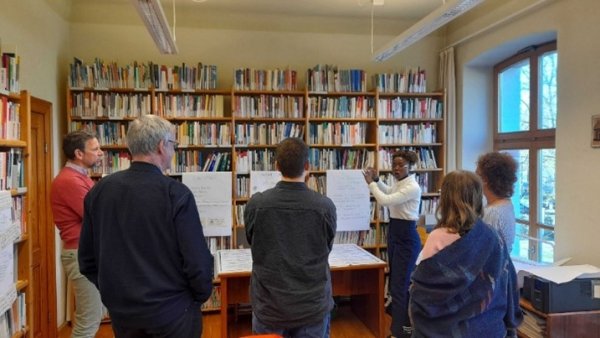
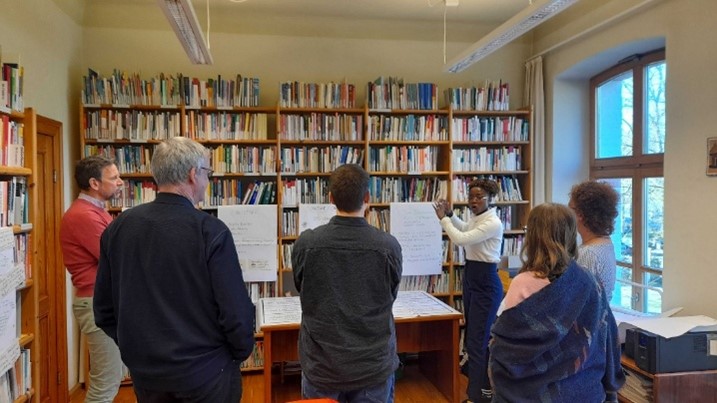
To build the foundation for this collaboration, a four-day onboarding workshop was held from 23 to 27 February at CAMECO’s office in Aachen, Germany.
This has been the first time within the Civil Peace Service that a South-North position has been launched by AGIAMONDO to place an international expert inside Germany in a partner organization.
Ms. Justine Cibembe is CAMECO’s new advisor for Dealing with the violent past.
A native of Bukavu in eastern DRC, she brings expertise in peacebuilding, transitional justice, peace communication, and addressing histories of violence through a community-based approach that is sensitive to gender, trauma, and conflict. She has worked for over five years in the Great Lakes region on Peace and Development projects with national organizations such as LDGL(Ligue des Droits de la Personne dans la region de Grands Lacs)—on a memory work program for dealing with the past and combating impunity through radio broadcasts and the documentation of mass crimes in the DRC—and international organizations such as GIZ.The placement of an Expert from the Global South at CAMECO as an organization in the North is part of an innovative AGIMONDO South-North initiative to enhance mutual learning and solidifies the ties between development cooperation and peace building partners in Europe and the Great Lakes region.
It also aims at building synergies between international and local expertise.