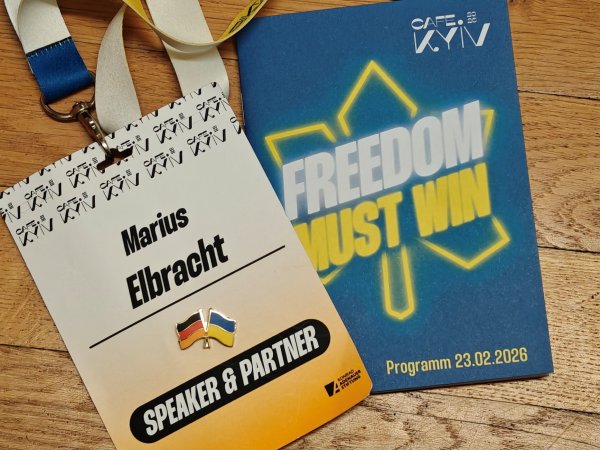
Café Kyiv 2026, organized by the Konrad Adenauer Foundation (KAS), once again provided an excellent opportunity to reconnect with colleagues and partners while gaining insight into a wide range of inspiring projects and initiatives supporting Ukraine. As in previous years, the event offered such a broad spectrum of discussions and perspectives that it was impossible to explore everything in depth - yet several panels clearly stood out.
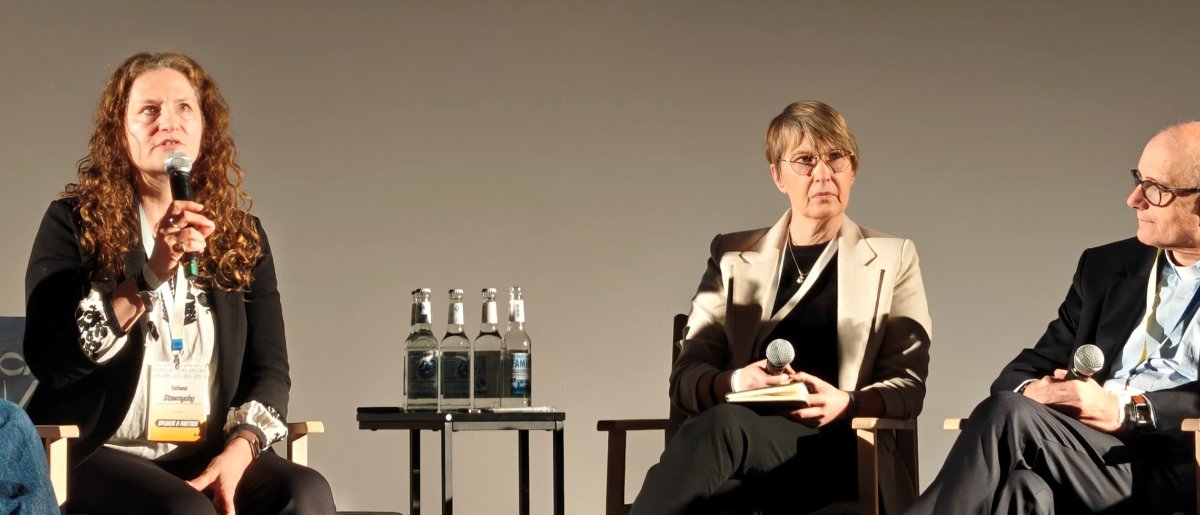
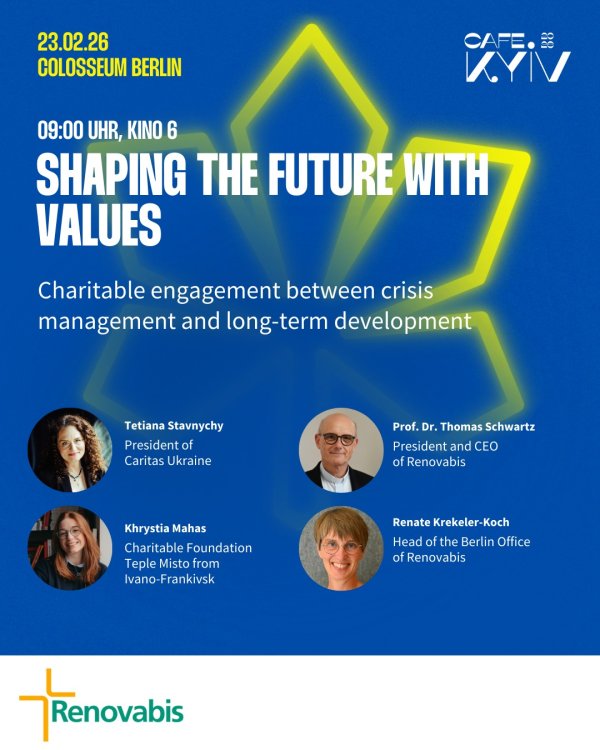
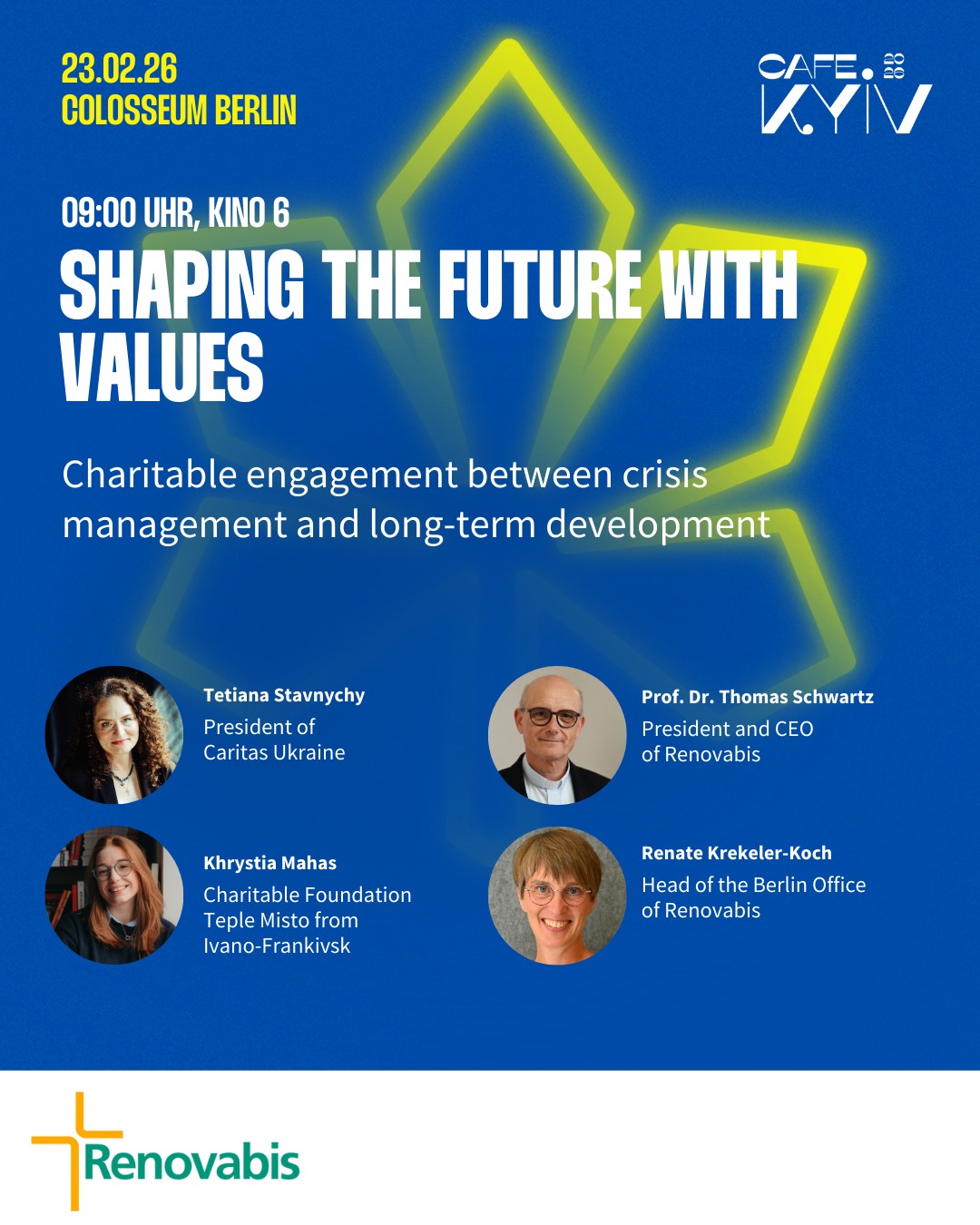
One highlight was the panel “Shaping the Future with Values,” featuring Tetiana Stawnychy (Caritas Ukraine), Prof. Dr. Thomas Schwartz (Renovabis), and Khrystyna Mahas (Teple Misto), moderated by Renate Krekeler-Koch (Renovabis).
Tetiana Stawnychy offered a sobering account of the daily realities facing humanitarian workers in Ukraine. The so-called “kill zone” now stretches far beyond the traditional Line of Contact, and aid workers themselves are increasingly targeted while attempting to reach communities most affected by the war. This creates significant risks for Caritas staff during evacuations and the delivery of humanitarian assistance.
Beyond emergency aid, Caritas Ukraine has established 70 Resilience Centres across the country in partnership with the Ministry of Social Policy as part of the nationwide mental health program “How Are You?”. These centres are open to everyone and provide safe, inclusive spaces offering psychological support, social services, and access to recovery resources. They also strengthen community ties, particularly for internally displaced people (IDPs), families, and other vulnerable groups.
As Stawnychy emphasized, resilience is rooted in strong human relationships and communities - ranging from emergency response to stabilization and long-term recovery. A key strength of Caritas Ukraine lies in its network of religious communities, which operate in an environment of trust and solidarity.
Prof. Dr. Thomas Schwartz underlined the importance of local actors in this context: “There is a parish or church everywhere, and people who take responsibility. They have a long-term interest in the people they serve.” This commitment to social engagement is also reflected in the Renovabis scholarship program, which supports around 750 students at the Ukrainian Catholic University (UCU) and encourages volunteer work and community service to strengthen social cohesion.
Stawnychy also highlighted localization as a cornerstone of effective humanitarian response - shifting responsibility, decision-making power, resources, and funding to local actors in Ukraine to foster genuine empowerment and self-efficacy.
This approach closely aligns with the work of Teple Misto, a grassroots civil society platform based in Ivano-Frankivsk that promotes sustainable community development, innovation, and civic engagement. Through small grants, Teple Misto supports local urban, cultural, and environmental initiatives, including the transformation of a former factory into an innovation hub, the coordination of volunteer activities, and the organization of cultural programs aimed at strengthening community participation.
Such initiatives are particularly important in addressing the internal displacement and social fragmentation caused by the war. Khrystyna Mahas explained that many IDPs -even four years into the full-scale invasion - remain in a state of constant movement, often feeling at the mercy of circumstances beyond their control. Rebuilding social ties and giving people a sense of agency within their communities is therefore essential for both personal healing and sustainable recovery.
Teple Misto promotes this process through innovative forms of community engagement, including non-traditional mental health support and the concept of “third places”-informal public spaces where people can gather, interact, and reconnect with one another.
With support from Renovabis, both Caritas Ukraine and Teple Misto focus particularly on assisting IDPs, families of military personnel, and other vulnerable groups. Their work demonstrates how collaboration and strong local engagement can foster resilient communities even in extremely challenging circumstances.
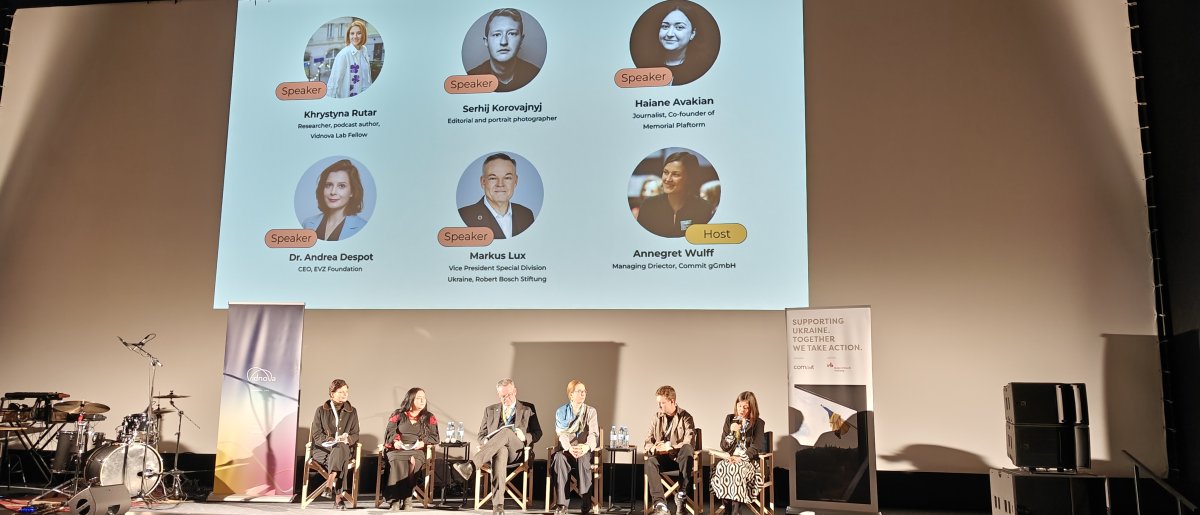
Another particularly compelling discussion took place during the panel “From Stories to Records: How Ukraine is Shaping Its Collective Memory.” Participants included Markus Lux (Robert Bosch Stiftung), Andrea Despot (Stiftung EVZ), Haiane Avakian (Memorial.ua), Khrystyna Rutar (UCU), and photographer Serhii Korovaynyi, moderated by Annegret Wulff (Commit gGmbH).
The panel made clear that memory, remembrance, and dealing with the past are not marginal topics - especially in a context where history itself is manipulated and instrumentalized for imperial ambitions. Russia’s war against Ukraine combines kinetic warfare with strategic narratives, propaganda, and disinformation aimed at disrupting societies, undermining trust, and influencing political outcomes. These dynamics also extend to historical memory, where Russian narratives have long dominated transnational remembrance cultures.
In this context, compromise for many Ukrainians would not represent a pragmatic political solution but rather a threat to their culture, language, and identity - ultimately putting the existence of the Ukrainian nation at risk. As a result, resistance manifests across all spheres of Ukrainian life, including cultural centres, theatres, museums, libraries, and educational institutions.
Organizations such as Stiftung EVZ and the Robert Bosch Stiftung therefore support initiatives that strengthen cultural life and remembrance, including third places and community-based memory projects that contribute to identity formation, social cohesion, and democratic resilience.
Haiane Avakian leads Memorial.ua, a project dedicated to documenting the lives of civilians and soldiers killed in the war. What began as a small initiative on Facebook and Instagram has grown into a major platform preserving more than 11,000 personal stories. Rather than focusing on numbers, Memorial.ua highlights names, lives, and relationships, ensuring that victims are remembered as individuals while also contributing to the documentation of war crimes and international accountability.
Khrystyna Rutar contributes to this effort through the Studio of Memory podcast, which explores how art, testimony, archives, and everyday practices shape collective memory and identity. Her work highlights the ethical and political significance of remembrance in preserving dignity, strengthening social cohesion, and promoting accountability.
Photographer Serhii Korovaynyi documents life in Ukraine’s de-occupied territories, capturing the human impact of war and the realities of daily survival. His images create a powerful visual record of affected civilians, soldiers, and communities.
Together, these initiatives illustrate how memory work, cultural engagement, and community-based documentation play a vital role in strengthening Ukrainian society -preserving identity, fostering solidarity, and building resilience in the face of ongoing war.
As several speakers emphasized during the discussion: to remember is always an act - a living practice of coming to terms not only with history, but also with an ongoing and violent present.